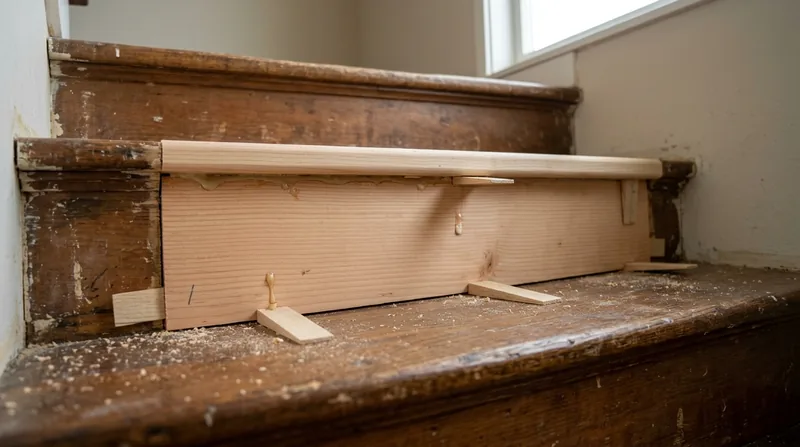




Stair & Railing Repair in Kennewick keeps older homes safe and newer ones code-compliant. The Tri-Cities sits in the shrub-steppe desert where the Columbia, Snake, and Yakima rivers meet, with only 7 inches of rain per year but intense UV, strong winds, and sharp freeze-thaw winters. That climate takes a toll on interior stairs and railings. Squeaky treads, loose balusters, worn stringers, and wobbly handrails are common in Kennewick's 1940s-1950s frame homes near downtown, the wartime Hanford alphabet houses across central Richland, and the 1960s-1990s ranch homes and split-levels lining Pasco and West Richland. We repair staircases in homes old and new, restore original railings, and install code-compliant handrails that pass inspection. Our work starts with a walk-through and honest assessment of what can be fixed and what needs replacement.
Why Stair & Railing Safety Matters in Kennewick Homes
A loose tread or wobbly banister is not just an annoyance. It is a safety hazard that worsens with every footfall. In older homes, wood stringers dry out and crack under the desert sun and freeze-thaw cycles. Fasteners loosen. Balusters work free from their rails. Handrails pull away from walls. A child or elderly resident can slip, and a fall down stairs causes serious injury. Newer homes built in the last 20 years face different pressures: fasteners corrode, and code requirements for handrail height, baluster spacing, and graspability have tightened since those homes were framed.
- We tighten loose treads and risers by re-fastening stringers and reinforcing tread-to-stringer joints.
- We repair or replace worn stringers that have cracked, cupped, or split from moisture and sun exposure.
- We restore original balusters and newel posts, or install new ones that match the home's style and pass current code.
- We install or repair handrails that are secure, graspable, and meet height and spacing requirements for your jurisdiction.
- We assess whether a railing or baluster assembly can be reinforced or must be replaced for safety and compliance.
Every repair we make is designed to last and to keep your family safe on the stairs.
Key info: Stair and railing repairs in Kennewick and Pasco often require a permit if the work affects the structure or changes the configuration of the stairs or railings. Check with your local building department to confirm permit requirements before work begins. We can help you understand what a permit involves.
How We Repair Stairs & Railings in Kennewick
Every stair repair starts with a detailed inspection. We walk the stairs, feel for movement, check fasteners, and examine the wood grain for cracks, splits, and cupping. We look at how the stringer is fastened to the floor, how treads are joined to stringers, and how the railing is mounted to walls and balusters. We document what we find and explain the options: repair, reinforce, or replace. Our goal is always to save the original wood and craftsmanship when the structure is sound, and to replace only what time and the desert climate have damaged beyond repair.
- We inspect the full staircase, including stringers, treads, risers, balusters, newel posts, and handrails for movement and damage.
- We identify the root cause: loose fasteners, wood movement, moisture damage, or structural shift in the home.
- We reinforce treads and risers by re-fastening or adding shims and screws where nails have worked loose over decades.
- We repair or sister stringers if they have cracked but retain structural integrity, or replace them if rot, splits, or severe cupping leave no alternative.
- We restore or install balusters and handrails, ensuring they meet current code for spacing, height, and graspability.
- We finish the work with stain, paint, or clear coat to match the existing stairs and protect the wood from future sun and dust damage.
The result is a staircase that is safe to use, looks original or new depending on your choice, and will serve your home for decades.
Local example: A 1970s split-level in West Richland had squeaky stairs and a loose handrail. We found that the stringer had cupped and moved slightly as the foundation settled in the loess silt soil. We reinforced the stringer with additional fasteners, replaced two treads that had split, and installed a new handrail. The stairs are now solid and the railing is code-compliant. Our work also included floor joist reinforcement where the stringer met the upper floor.
Stair & Railing Repair Methods
| Approach | Description | Best for |
|---|---|---|
| Tightening & Re-fastening | Remove loose nails, add screws, shim gaps, and tighten all fasteners to stringers and railings. | Squeaky treads, loose balusters, and minor movement caused by fastener failure or wood shrinkage. |
| Tread & Riser Replacement | Remove worn or cracked treads and risers, then install new ones matched to the existing staircase profile and finish. | Treads with splits, cupping, or wear; risers damaged by moisture or impact. |
| Stringer Reinforcement | Sister a new stringer alongside a cracked or cupped original, or add bracing and fasteners to strengthen an existing stringer. | Stringers with moderate cracks or cupping; stairs that have shifted slightly but the wood is not rotted. |
| Stringer Replacement | Remove the damaged stringer and install a new one, cut and fitted to match the existing staircase geometry and baluster locations. | Stringers with severe rot, major splits, or structural failure; stairs that must be brought to current code. |
| Railing & Baluster Repair | Repair or replace balusters, newel posts, and handrails; ensure spacing and height meet code; refinish to match. | Loose or broken balusters, split newel posts, handrails that are not graspable or do not meet code height. |
Stair & Railing Repair Cost in Kennewick: What to Expect
Stair and railing repairs in Kennewick start at around $600 for basic tightening and fastener replacement on a short run of stairs. Larger jobs, such as tread replacement or stringer reinforcement, typically run $1,200 to $2,500 depending on the number of treads, access, and the extent of the damage. Full stringer replacement or a complete railing rebuild can reach $3,500 to $5,000 or more. The cost depends on how many treads need work, whether the stringers are accessible, the wood species, and whether the work requires a permit and inspection.
Several factors move the price up or down. A narrow interior staircase is cheaper to work on than a wide open staircase with a landing. A staircase with rot or structural damage costs more than one with only squeaks and loose fasteners. If the home's siding or flooring must be removed to access the stringer, labor goes up. If balusters must be custom-cut to match an original design, that adds time and cost. Visit our pricing page for a full breakdown and to request a free estimate.
We recommend getting 2 to 3 estimates from local carpenters before you decide. An estimate should include a detailed list of what will be repaired or replaced, the materials, the timeline, and the total cost. It should also clarify whether a permit is required and who will handle the permit application. Call us at (509) 581-4504 for a free, no-obligation estimate.
Stair & Railing Repair Near Me: What Kennewick Homeowners Should Know
When you hire a carpenter for stair and railing work, make sure they are fully insured and have experience with your home's age and style. Older Kennewick homes built in the 1940s and 1950s often have stringers cut from Douglas fir or redwood, and balusters turned on a lathe. Newer split-levels and two-story homes may have engineered stringers and factory-made railings. A good carpenter knows the difference and can repair or replace either with equal skill. Ask for references from recent jobs, and check that the contractor understands local permit requirements for stair and railing work. Some jurisdictions require a permit for structural changes or code updates; others do not. Your local building department has the final say, so ask before work starts.
If your home is in a homeowners association, check whether the HOA has rules about stair or railing changes. Some associations require approval before exterior work or changes visible from the street. Interior stair changes are usually not restricted, but it is worth asking. When you call for an estimate, be ready to describe the problem: squeaky treads, loose railings, cracks in the stringers, or balusters that move. Photos are helpful. The carpenter will then schedule a walk-through, inspect the stairs, and give you a written estimate and timeline. Contact us at (509) 581-4504 or visit our contact page to book your free estimate today.
Stair & Railing Repair in Kennewick: Pricing Guide
| Service | Price | Details |
|---|---|---|
| Tightening & re-fastening | Starting at $600 | Loose treads, squeaky steps, and minor baluster movement; includes inspection and fastener replacement |
| Tread or riser replacement | Starting at $900 | One to three treads or risers; cost increases with each additional tread and complexity of finish matching |
| Stringer reinforcement or repair | Starting at $1,500 | Cracked or cupped stringers; includes inspection, reinforcement, and new fasteners or sistering as needed |
| Full stringer replacement or railing rebuild | On estimate | Requires on-site inspection to measure, assess wood condition, and confirm permit requirements with local authority |
| Travel | Included | No separate mileage fee for jobs in Kennewick, Richland, Pasco, West Richland, and surrounding areas |
| Free estimate | No obligation | Call (509) 581-4504 for a detailed inspection, written quote, and timeline; response within 24 hours |
Indicative pricing, the exact cost depends on square footage, finish, and site access. Free personalized estimate within 24h at (509) 581-4504.


