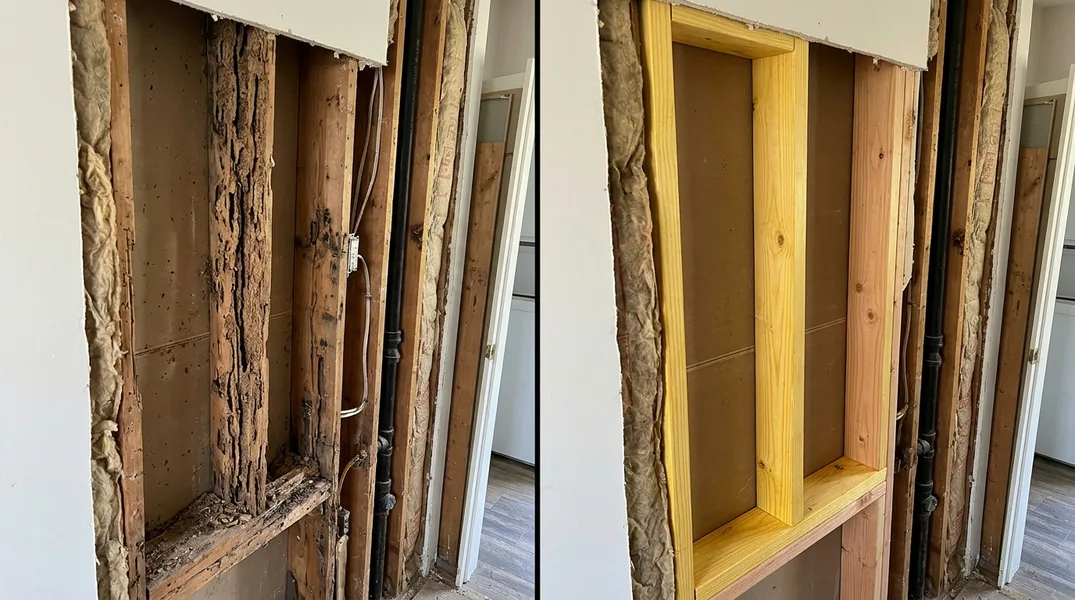
What Are Carpenter Ants and Why Are They a Problem?
Carpenter ants are large wood-destroying insects that tunnel through structural timber to create nesting galleries. Unlike termites, they don't actually eat the wood, but they excavate it to build their colonies. This behavior leaves behind extensive voids and weakened wood that can compromise the integrity of your home's frame, beams, and support structures. If left unchecked, carpenter ant infestations can cause damage that rivals that of termites or wood rot.
In the Kennewick area, carpenter ants thrive in our climate, particularly in spring and summer when they become most active. They're attracted to moist wood, which is why homes with water leaks, poor drainage, or existing Wood Rot & Dry Rot Repair issues are especially vulnerable. The challenge is that carpenter ants often go unnoticed until significant damage has already occurred, making early detection crucial for protecting your investment.
Signs of Carpenter Ant Damage in Your Home
The first warning sign of carpenter ants is often seeing the insects themselves, particularly large black or reddish-black ants, either indoors or around your property. You might notice them trailing along baseboards, window frames, or exterior wood surfaces, especially during dawn or dusk when they're most active. However, visible ants don't always mean you have a full infestation yet, so it's important to investigate further if you spot them regularly.
Beyond seeing the ants themselves, look for physical signs of their activity. Carpenter ant damage typically appears as clean, smooth tunnels inside wood, often with sawdust-like debris (called frass) left near entry holes or around infested areas. You may notice small piles of this wood-colored dust on floors, shelves, or in crawl spaces. Damaged wood may sound hollow when tapped, and in advanced cases, you'll see visible galleries or cavities within structural members. Homeowners in Kennewick dealing with carpenter ants should also watch for soft spots in flooring, sagging ceilings, or weakened door and window frames, as these indicate the damage has progressed significantly.
How Carpenter Ant Damage Differs from Other Wood Damage
Many homeowners confuse carpenter ant damage with termite damage or wood rot, but each requires different treatment approaches. Termite damage tends to follow the grain of the wood and often leaves behind mud tubes or a honeycomb-like pattern. Carpenter ant galleries, by contrast, are smooth and clean, cutting across the grain with precision. Wood rot, whether caused by fungi or moisture, typically results in soft, crumbly, or discolored wood that deteriorates over time. Carpenter ants create structural voids but leave the wood surface relatively intact initially.
Understanding the difference matters because the repair strategy varies. While Termite Damage Repair often requires pest control treatment alongside structural fixes, carpenter ant damage primarily needs the insects eliminated and then the damaged wood replaced or reinforced. If your home has moisture problems contributing to carpenter ant attraction, addressing those issues is equally important to prevent reinfestation. A professional inspection can determine exactly what you're dealing with and recommend the right solution.
Carpenter Ant Damage Repair: What the Process Looks Like
Once carpenter ants are confirmed, the repair process begins with pest elimination. A licensed pest control professional will treat the infestation to stop new tunneling and remove the colony. This step is essential before any structural repair begins, because repairing wood while ants are still active is ineffective. After pest control treatment is complete and the infestation is confirmed eliminated, your carpenter can assess the extent of structural damage and plan repairs.
The actual repair work depends on how much wood has been compromised. Minor damage in non-structural areas might require only wood filler or patching. More serious damage affecting support beams, floor joists, or load-bearing walls demands replacement of the damaged sections. In some cases, Floor Joist & Subfloor Repair is necessary if the infestation reached your home's foundation support system. For extensive damage to critical structural elements, Beam Replacement & Load-Bearing Wall Removal services may be required to restore your home's safety and stability. The goal is to return your wood structure to sound condition while preventing future infestations through moisture control and regular inspections.
Carpenter Ant Damage Repair Cost in Kennewick: What to Budget
The cost of repairing carpenter ant damage varies widely depending on the extent of the infestation and the location of the damage. Minor repairs affecting only trim or non-structural wood might cost anywhere from a few hundred to a couple thousand dollars. However, if the damage extends to floor joists, beams, or wall framing, you could be looking at significantly higher expenses. Some homeowners face repair bills in the five-figure range when structural elements require replacement, particularly if the infestation went undetected for years.
Several factors influence your final cost. The size of the affected area, the type of wood involved, local labor rates in Kennewick, and the complexity of access all play a role. Additionally, if moisture issues or other problems need addressing to prevent recurrence, those remediation costs factor in as well. The best way to understand your specific situation is to request a free estimate from a qualified carpenter. Kennewick Carpentry can evaluate your damage, provide transparent pricing, and discuss repair options that fit your budget.
Preventing Carpenter Ants and Protecting Your Home
Prevention is always more cost-effective than repair. Carpenter ants are drawn to moisture, so the first line of defense is eliminating water problems in your home. Fix leaky roofs, gutters, and downspouts promptly. Ensure proper grading around your foundation so water drains away from the house. Inspect and repair any damaged siding or trim that exposes wood to the elements. Keep wood mulch and debris away from your home's exterior, as these provide shelter for carpenter ants and can facilitate their movement toward your structure.
Regular inspections are equally important. Walk around your home seasonally, looking for signs of carpenter ant activity, wood damage, or moisture issues. Pay special attention to areas prone to dampness, such as crawl spaces, basements, and around plumbing penetrations. If you spot any warning signs, contact a professional immediately rather than waiting to see if the problem resolves itself. Early intervention can save thousands in repair costs. For homeowners in the Tri-Cities area concerned about carpenter ants or existing wood damage, Kennewick Carpentry is here to help. Call us at (509) 581-4504 or reach out online to schedule an inspection and get peace of mind about your home's structural health.
Looking for a professional carpentry contractor in Kennewick? Kennewick Carpentry responds fast for all your carpentry needs.
Get a Free QuoteOur services: Wood Rot & Dry Rot Repair · Termite Damage Repair · Floor Joist & Subfloor Repair